• GENERAL COURSE OVERVIEW.

    Welcome to my new Gnomio site.

    Now, you are in control!

    Welcome to this Gnomio learning platform. This site has been designed as a structured space where learners can access course materials, resources, and guided content for reference and study purposes.

    To get started, navigate the subject sections, where each unit is organized into topics, view/ go through the provided materials, follow the structure, and engage with the content independently.

    Where applicable, you may be allowed to leave comments or feedback in designated areas. Kindly ensure that all comments are relevant, respectful, and contribute positively to the learning environment.

    Navigate through the sections to access the topics, notes, and additional resources. Be sure to check each section carefully to ensure you do not miss important information.

    For any clarification or assistance, please get in touch with the course instructor.

    (You can edit or remove this text)

Available courses

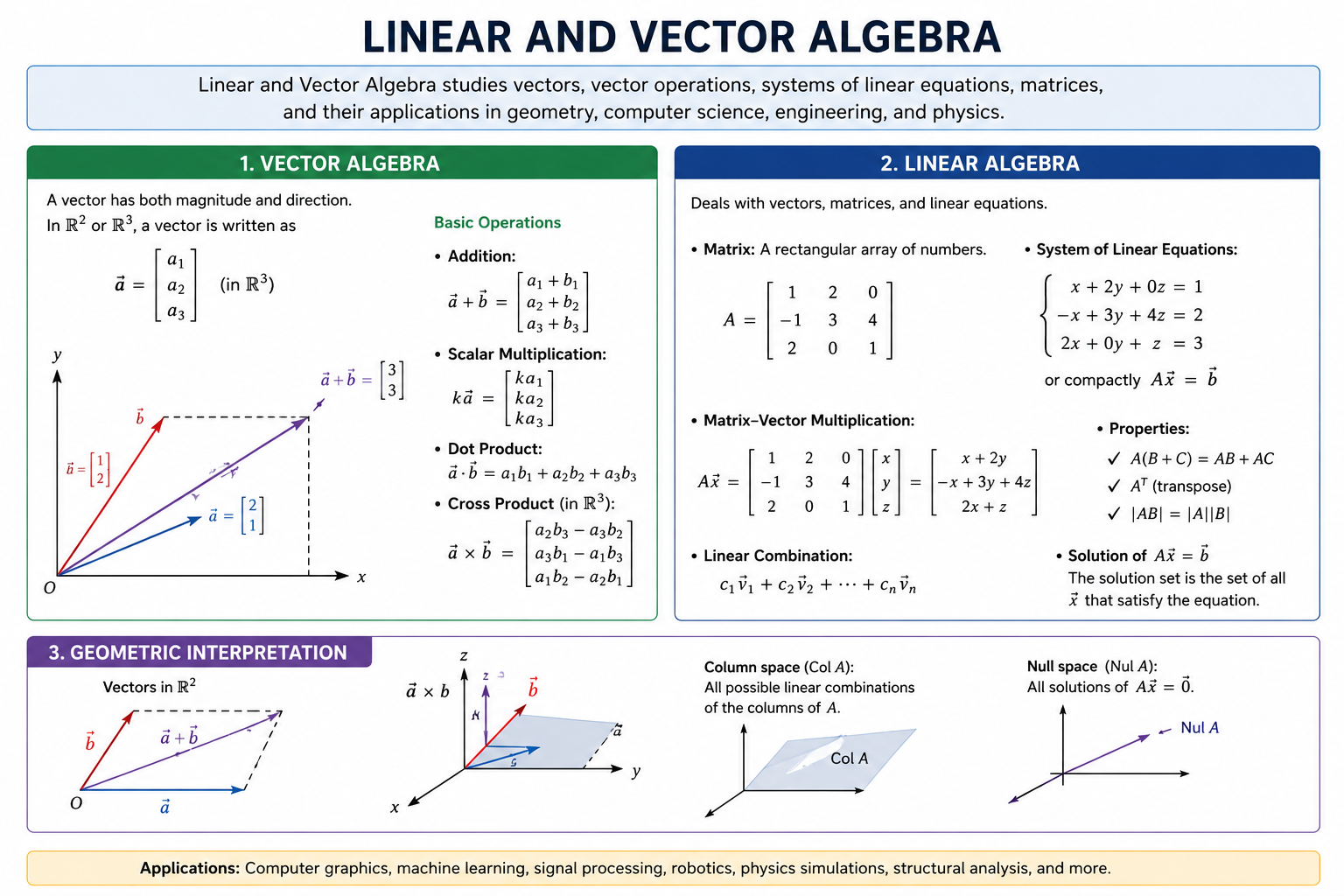
Linear and Vector Algebra is a branch of mathematics that studies vectors, matrices, and linear equations. It focuses on how quantities with magnitude and direction interact, as well as how systems of equations can be represented and solved using algebraic methods. The unit helps learners understand concepts such as vector operations, matrix transformations, determinants, and vector spaces. Linear and Vector Algebra is widely applied in engineering, computer science, physics, economics, data analysis, machine learning, and graphics because it provides tools for modeling and solving real-world problems efficiently.

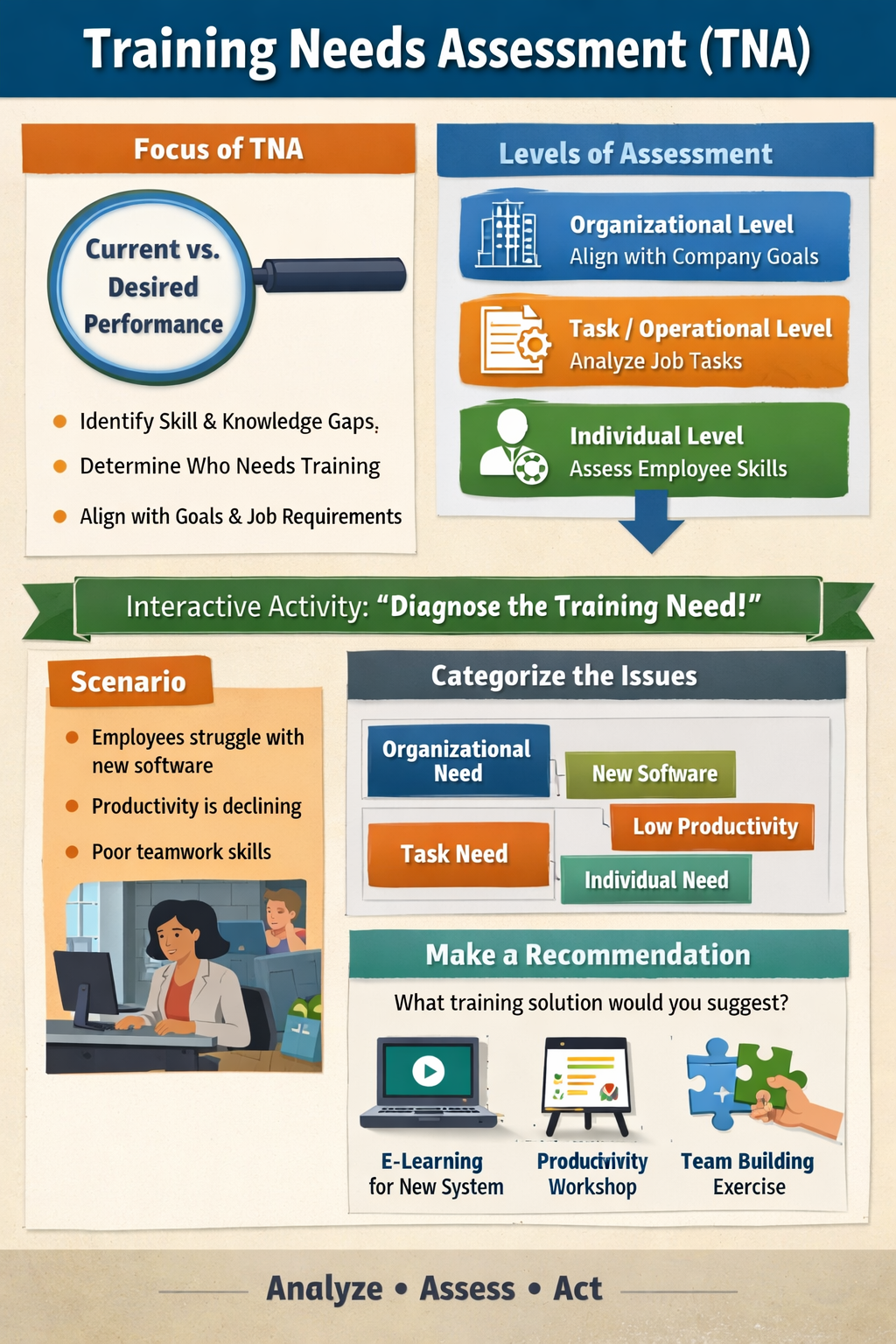
 Training Needs Assessment (TNA) focuses on systematically identifying and analyzing the gap between current performance and desired performance within an organization or learning environment.

Its core emphasis is to:

  • Determine what training is needed, if any.
  • Identify who needs the training.
  • Establish the specific skills, knowledge, and attitudes required.
  • Ensure training aligns with organizational goals and job requirements.

TNA operates at three key levels:

  • Organizational Level – aligns training with institutional goals and performance issues
  • Task/Operational Level – identifies skills required to perform specific tasks effectively
  • Individual Level – assesses learners’ or employees’ specific competency gaps

Overall, TNA ensures that training interventions are evidence-based, relevant, and outcome-driven, avoiding unnecessary or ineffective training.

Learning Outcomes.                                                                                     

By the end of learning about Training Needs Assessment, learners should be able to:                                                                                                             

1. Define Training Needs Assessment and explain its purpose.                       

2. Identify and analyze performance gaps in real-life contexts.                       

3. Differentiate between organizational, task, and individual training needs.

4. Select appropriate data collection methods (e.g., interviews, surveys, observations)

Sample Interactive Activity.

  1. Enable learners to apply TNA concepts in identifying and categorizing training needs.
  2. Learners to drag each issue into the correct category: Organizational need, Task/Operational need, and Individual need.
  3. Learners to design one training recommendation based on the identified needs.

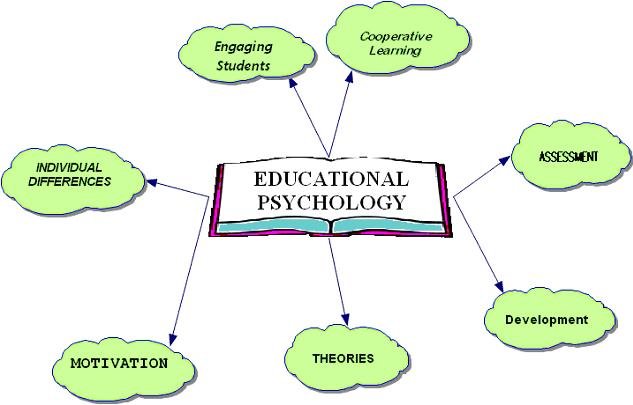
This course introduces learners to the principles of educational psychology and their application in Technical and Vocational Education and Training (TVET). It focuses on understanding learner behavior, cognitive development, motivation, and learning strategies to enhance teaching effectiveness. The course integrates theory with practice and uses e-learning tools to foster interactive, learner-centered experiences.

Learning Outcomes

By the end of this course, learners/ trainees should be able to:

1.Explain key theories of learning and development relevant to TVET.

2. Apply psychological principles to support diverse learner needs.

3. Analyze learner motivation and implement strategies to enhance engagement.

4. Integrate educational psychology concepts into lesson planning and instructional design.

Sample Interactive Activities.

1.Case Studies: Analyze real-life learner behavior scenarios and suggest intervention strategies.

2. Quizzes & Polls: Short formative quizzes on learning theories and psychological principles.

3. Reflective Journals: Write reflections on learner motivation strategies implemented in practice sessions.

4. E-Portfolio Tasks: Upload lesson plans or assessment designs demonstrating integration of educational psychology principles.

5. Interactive Simulations: Virtual classroom scenarios to practice adapting teaching for diverse learner needs.

6. Discussion Forums: Debate the application of Piaget’s and Vygotsky’s theories in TVET classrooms.
Education Administration focuses on the management and leadership of educational institutions. The course explores administrative principles, leadership styles, policy implementation, and effective management of resources within schools and training institutions. It highlights the role of administrators in planning, organizing, coordinating, and supervising educational programs. Learners develop knowledge and skills necessary for effective decision-making, staff management, and the promotion of quality education in institutions.

Learning Outcomes

By the end of the course, learners should be able to:

  1. Explain the concept and importance of education administration.

  2. Identify roles and responsibilities of educational administrators.

  3. Apply leadership and management principles in educational settings.

  4. Demonstrate skills in planning and organizing school programs.

Sample Interactive Activities

1. Leadership Role Play
Learners simulate decision-making situations faced by school administrators.

2. School Management Case Study
Learners analyze challenges faced by school administrators and suggest solutions.

3. Group Discussion
Learners discuss effective leadership styles in educational institutions.

4. Policy Analysis Activity
Learners review an education policy and discuss its impact on school management.

5. Planning Exercise
Learners develop a basic plan for managing a school event or program.

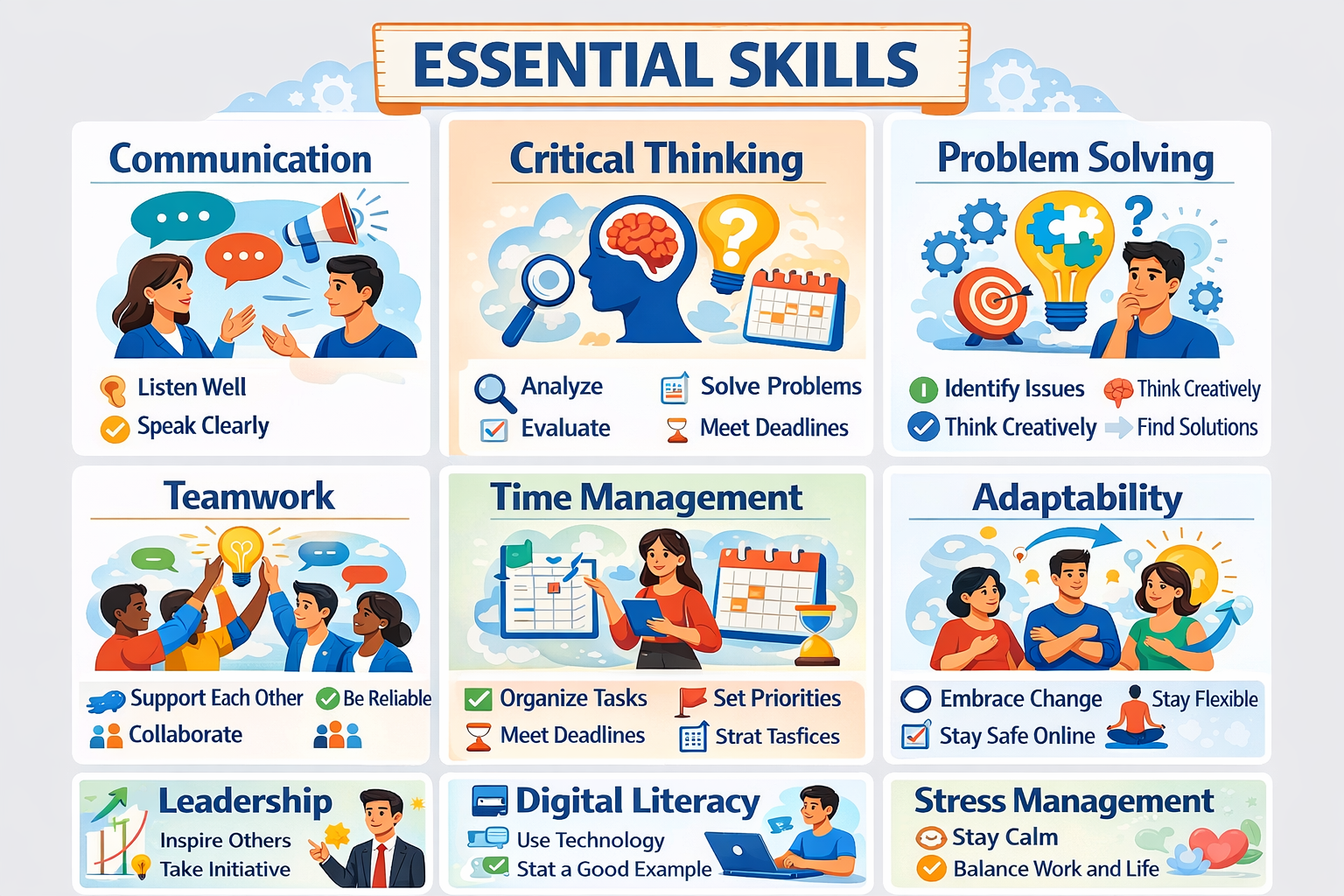
The Essential Skills course equips learners with fundamental competencies required for effective learning, workplace success, and personal development. The course focuses on developing communication, problem-solving, teamwork, digital literacy, and personal management skills. Learners gain practical abilities that enable them to interact effectively with others, manage tasks responsibly, and adapt to different social and professional environments. Through participatory learning approaches such as discussions, role plays, and group projects, learners build confidence and improve their capacity to function productively in both academic and workplace settings.

Learning Outcomes.

By the end of this course, learners should be able to:

  1. Demonstrate effective communication skills.

  2. Apply critical thinking and problem-solving skills.

  3. Work collaboratively in teams.

  4. Use basic digital and information skills.

    Sample Interactive Activities.

    1. Role Play (Communication Skills)
    Learners act out a scenario between a supervisor and an employee discussing a workplace problem to help learners practice effective communication, listening, and conflict resolution.

    2. Group Problem-Solving Activity
    Learners are given a real-life case study (e.g., resolving a team conflict or completing a project with limited time). Groups discuss and present possible solutions.

    3. Teamwork Challenge
    Learners work in small groups to complete a task such as designing a simple project plan or building a model using limited materials to encourage cooperation and leadership.

    4. Time Management Exercise
    Learners create a weekly schedule showing how they balance study, work, and personal activities, and then they discuss strategies for improving productivity.

    5. Digital Skills Practice
    Learners perform a simple task such as researching information online and presenting their findings using a short digital presentation.

    6. Reflection Discussion
    Learners reflect on their strengths and areas of improvement in essential skills and share strategies for personal development.

Facilitating Assessment-Based Learning II (E-Learning) focuses on the use of digital technologies to support teaching, learning, and assessment processes. The course equips learners with skills to design, implement, and manage online learning environments using modern e-learning platforms and tools. It emphasizes competency-based assessment, digital content creation, learner engagement strategies, and the use of technology to monitor and evaluate student performance. Learners also explore best practices for facilitating online instruction and providing feedback in virtual learning environments.

Learning Outcomes.

By the end of the course, learners should be able to:

  1. Explain the concept and importance of e-learning in modern education.

  2. Utilize digital platforms and tools for online teaching and assessment.

  3. Design assessment-based learning activities in virtual environments.

  4. Facilitate interactive and engaging online learning sessions. 
    Sample Interactive Activities.

1. E-Learning Platform Practice
Learners create and manage a simple online course using a digital learning platform.

2. Digital Assessment Creation
Learners design online quizzes, assignments, or discussion forums.

3. Virtual Teaching Simulation
Learners conduct a short online lesson using presentation tools or learning management systems.

4. Group Discussion
Learners discuss the advantages and challenges of e-learning in education.

5. Peer Feedback Activity
Learners review and give feedback on each other's digital learning materials.

Sports Injuries and First Aid is a course that equips learners with knowledge and practical skills to recognize, prevent, and manage injuries that occur during sports and physical activities. The course covers common sports injuries, their causes, prevention strategies, and immediate first aid procedures. It also emphasizes the importance of safety measures, proper use of sports equipment, and basic emergency response techniques. Learners develop competence in providing immediate care to injured athletes before professional medical assistance is available.

Learning Outcomes.

By the end of the course, learners should be able to:

  1. Identify common types of sports injuries and their causes.

  2. Explain risk factors associated with sports and physical activities.

  3. Demonstrate basic first aid techniques for sports injuries.

  4. Apply injury prevention strategies during training and competitions.

    Sample Interactive Activities

    1. Practical First Aid Demonstration
    Learners practice bandaging, immobilizing injured limbs, and applying first aid techniques.

    2. Injury Identification Exercise
    Learners analyze images or scenarios of sports injuries and identify the type of injury and appropriate first aid response.

    3. Role Play Activity
    Learners simulate a sports match where an athlete gets injured, and another student demonstrates proper first aid procedures.

    4. Group Discussion
    Learners discuss common causes of injuries in different sports and suggest preventive measures.

    5. Case Study Analysis
    Learners examine real-life sports injury incidents and evaluate the effectiveness of the first aid response.

    6. Safety Awareness Poster Creation
    Learners design posters promoting injury prevention and safety in sports activities.

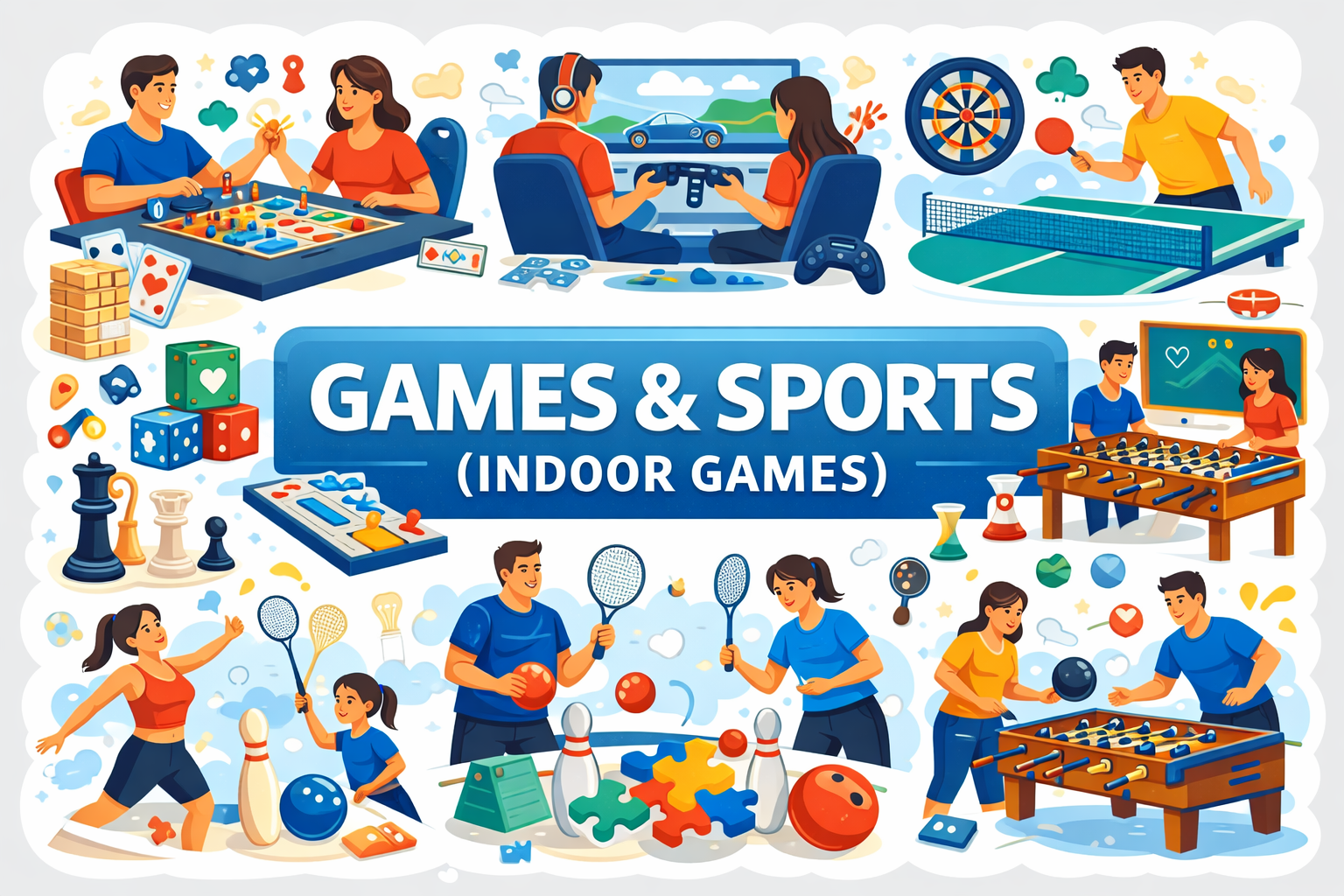
Games 2 and Sports (Indoor Games) focuses on developing physical fitness, coordination, strategic thinking, and teamwork through structured indoor sporting activities. The course introduces learners to various indoor games such as table tennis, badminton, chess, draughts, and other recreational activities played in enclosed facilities. Learners develop technical skills, understand rules and regulations of different games, and build values such as discipline, sportsmanship, cooperation, and fair play. The course also promotes mental alertness, decision-making, and healthy lifestyles through active participation.

Learning Outcomes.

By the end of the course, learners should be able to:

  1. Demonstrate basic skills and techniques.

  2. Explain and apply the rules and regulations.

  3. Participate effectively in indoor games.

  4. Apply strategies and tactics.

    Sample Interactive Activities.

    1. Skill Demonstration Practice
    Learners practice basic techniques such as serving in table tennis, chess opening strategies, or shuttle control in badminton.

    2. Mini-Tournaments
    Learners are grouped into teams and participate in short competitions (e.g., table tennis or chess tournaments) to apply skills and strategies.

    3. Rules and Strategy Discussion
    Learners discuss the rules of a selected indoor game and analyze strategies used by players to win matches.

    4. Peer Coaching Activity
    Learners work in pairs where one learner demonstrates a skill while the other observes and provides feedback.

    5. Game Strategy Challenge
    Learners analyze a game situation (e.g., chess or draughts board position) and suggest the best move or tactic.

    6. Reflection Session
    After playing, learners discuss what strategies worked, what challenges they faced, and how they can improve their performance.

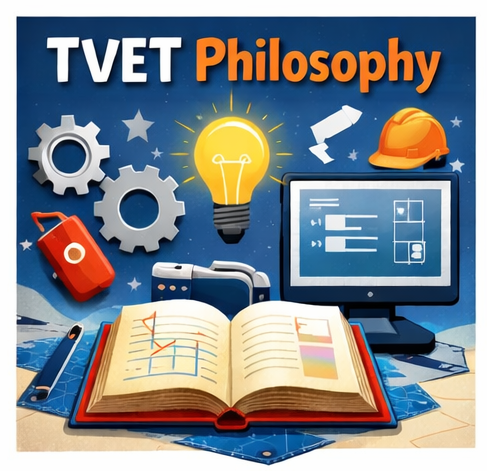
TVET Philosophy examines the principles, values, and theoretical foundations that guide Technical and Vocational Education and Training (TVET). The course explores the role of TVET in developing practical skills, promoting employment, and supporting economic development. It also highlights the importance of competency-based education, lifelong learning, and industry collaboration. Learners gain an understanding of how TVET contributes to workforce development and national productivity.

Learning Outcomes.

By the end of the course, learners should be able to:

  1. Explain the concept and philosophy of Technical and Vocational Education and Training (TVET).

  2. Describe the role of TVET in skills development and economic growth.

  3. Analyze principles guiding competency-based training in TVET.

  4. Explain the importance of linking education with industry needs.

    Sample Interactive Activities.

    1. Group Discussion
    Learners discuss the importance of technical skills in national development.

    2. Debate
    Topic example: “TVET education is as important as academic education.”

    3. Case Study Review
    Learners analyze successful TVET programs and their impact on employment.

    4. Industry Research Task
    Learners investigate local industries and identify skills required in the labor market.

    5. Presentation Activity
    Learners present the role of TVET in solving unemployment challenges.

Sociology of Education examines the relationship between society and the education system, while Gender and Inclusivity focuses on promoting equality, diversity, and fairness within educational environments and society. Learners gain an understanding of how schools operate within society and how education can either reinforce or reduce social inequalities. The course examines gender roles, stereotypes, discrimination, and barriers that limit participation in education and social life. It emphasizes inclusive practices that support learners regardless of gender, disability, socio-economic background, or cultural differences.

Learning Outcomes.

By the end of this course, learners should be able to:

  1. Explain the concept and scope of sociology of education, gender, equality, equity, and inclusivity.

  2. Describe the relationship between education and society.

  3. Identify gender stereotypes and their impact on education and society.
  4. Analyze the role of education in socialization and cultural transmission, and barriers that limit participation in education for marginalized groups.

    Sample Interactive Activities.

    1. Group Discussion
    Learners discuss how family background influences academic performance.

    2. Case Study Analysis
    Learners analyze real-life cases of inequality in education and suggest possible solutions.

    3. Gender Role Discussion
    Learners identify common gender stereotypes and discuss how they influence career choices.

    4. Scenario Analysis
    Learners analyze cases involving discrimination or exclusion and propose inclusive solutions.

    5. Inclusive Teaching Workshop
    Learners design teaching strategies that support students with different abilities and backgrounds.

    6. Role Play
    Simulate a classroom situation showing teacher–student interaction and its impact on student identity.

Sports Management focuses on the planning, organization, leadership, and administration of sports programs and activities. The course introduces learners to the principles and practices involved in managing sports teams, facilities, events, and organizations. It covers areas such as leadership, budgeting, event organization, marketing, and facility management. Learners gain knowledge and skills necessary to effectively coordinate sports programs, promote participation, and ensure the smooth running of sporting activities.

Learning Outcomes.

By the end of the course, learners should be able to:

  1. Explain the concept and importance of sports management.

  2. Demonstrate leadership and organizational skills in sports activities.

  3. Plan and manage sports events and competitions.

  4. Apply basic financial and administrative practices in sports organizations.

    Sample Interactive Activities.

    1. Sports Event Planning Activity
    Learners design a plan for organizing a school or community sports competition.

    2. Group Discussion
    Learners discuss the roles and responsibilities of a sports manager.

    3. Leadership Role Play
    Learners simulate managing a sports team during a competition.

    4. Budgeting Exercise
    Learners prepare a simple budget for organizing a sports event.

    5. Case Study Analysis
    Learners analyze successful sports events and identify management strategies used.

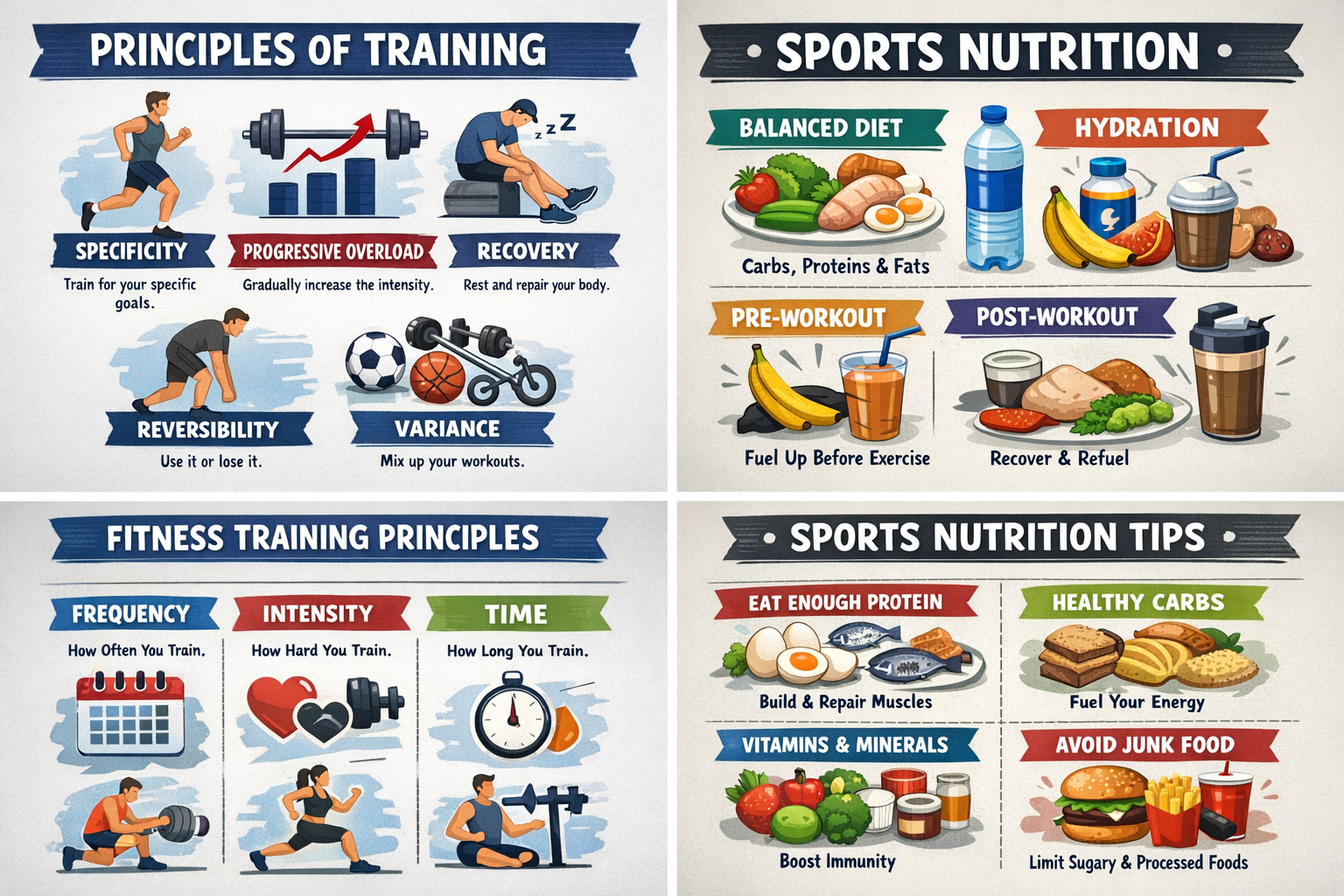
The Principles of Training and Sports Nutrition course introduces learners to the fundamental concepts that support effective physical training and optimal athletic performance. The course focuses on scientific training principles such as overload, progression, specificity, recovery, and individualization, while also exploring the role of proper nutrition in enhancing performance, recovery, and overall health. Learners gain knowledge about balanced diets, hydration, nutrient requirements for athletes, and safe training practices. Through practical activities and discussions, learners develop the ability to apply training principles and nutrition strategies to support fitness, sports performance, and healthy lifestyles.

Learning Outcomes.

By the end of this course, learners should be able to:

  1. Explain the key principles of physical training.

  2. Identify the nutritional requirements for athletes.

  3. Design basic training programs.

  4. Explain the importance of hydration and balanced diets.

    Sample Interactive Activities.

    1. Training Program Design Activity
    Learners work in small groups to design a simple weekly training plan for a specific sport, applying principles such as progression and recovery.

    2. Nutrition Planning Exercise
    Learners create a sample meal plan for an athlete preparing for training or competition, considering carbohydrates, proteins, fats, and hydration.

    3. Case Study Discussion
    Learners analyze a scenario where an athlete experiences fatigue or poor performance and discuss how training methods or nutrition could be improved.

    4. Food Group Identification Activity
    Learners categorize different foods according to their nutritional value (carbohydrates, proteins, fats, vitamins, and minerals) and discuss their importance for athletes.

    5. Hydration Demonstration
    Learners explore the effects of dehydration during exercise and discuss strategies athletes can use to maintain proper hydration.

    6. Reflection and Group Discussion
    Learners discuss how proper training principles and nutrition habits can improve health, fitness, and sports performance.